

Center for Safety Education

Categories
Safety Course

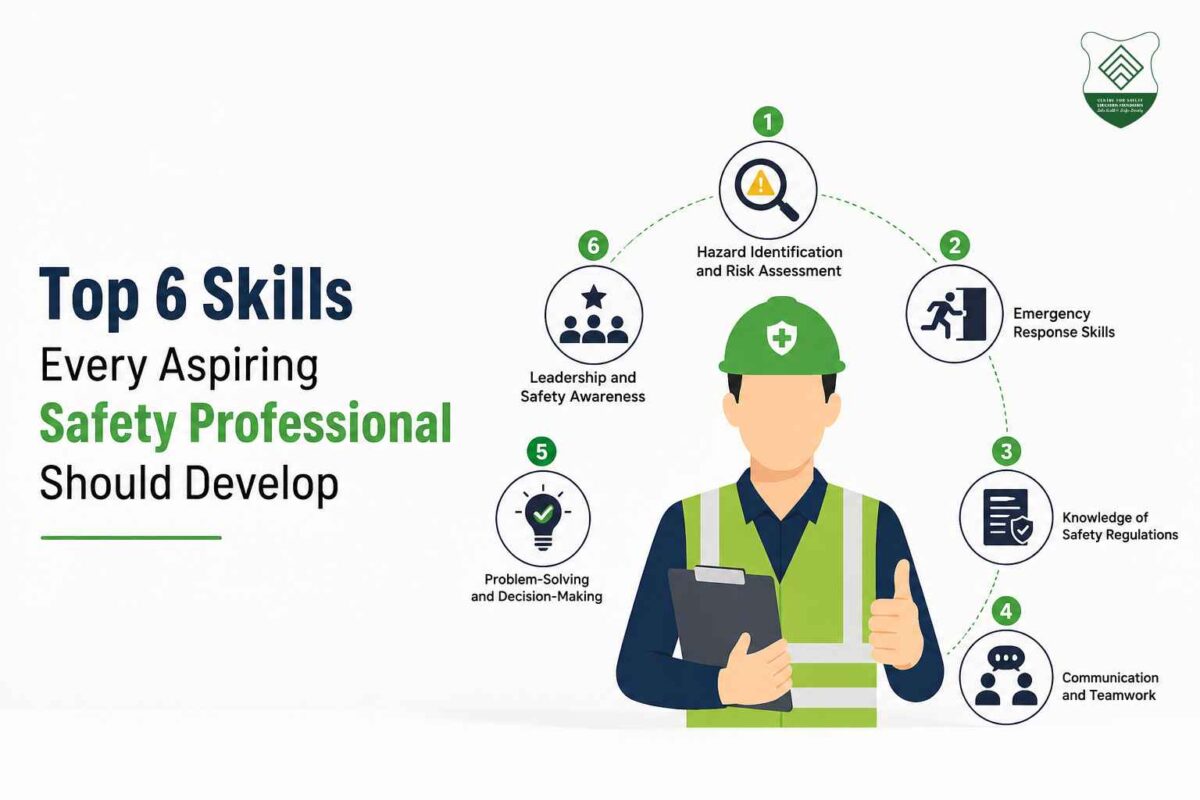
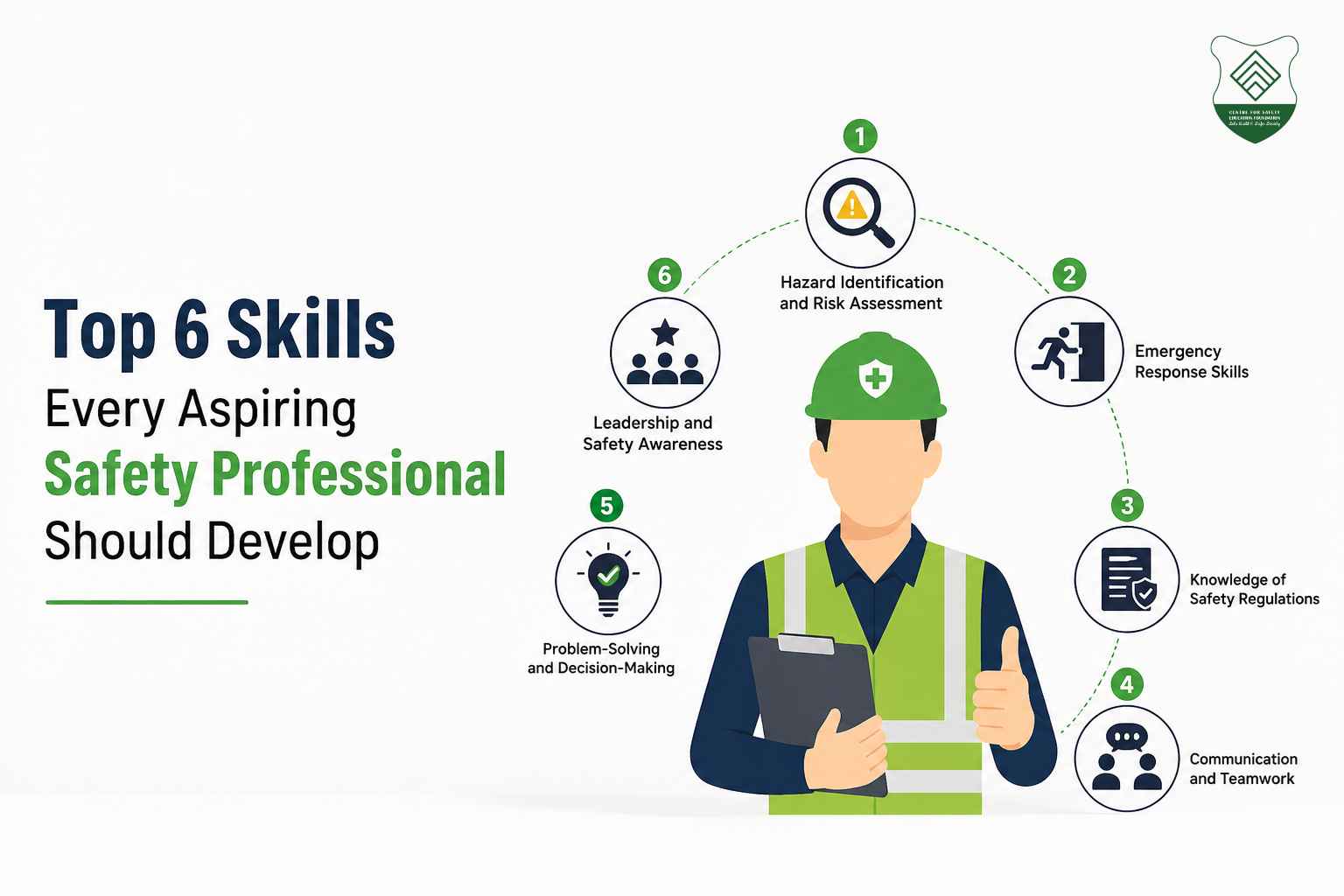
Top 6 Skills Every Aspiring Safety Professional Should Develop

Top 6 Skills Every Aspiring Safety Professional Should Develop

A career in workplace safety requires more than knowing rules and regulations. Safety professionals need technical knowledge, communication skills, leadership abilities and the confidence to respond effectively during emergencies. Choosing the Best Safety Training Institute in Kolkata can help aspiring professionals develop these essential skills. With the right safety courses, students can gain practical knowledge and prepare themselves for diverse roles across industries. 

  1. Hazard Identification and Risk Assessment

One of the most important skills for a safety professional is the ability to identify workplace hazards. Professionals should be able to assess risks, understand their potential impact and recommend suitable control measures to prevent accidents.

  1. Emergency Response Skills

Emergencies can happen without warning. Safety professionals must know how to respond quickly and efficiently to incidents such as fires, chemical spills, workplace injuries and other emergencies. Training in evacuation procedures, first aid and emergency response can help build confidence in critical situations.

  1. Knowledge of Safety Regulations

A good safety professional should understand relevant workplace safety standards, procedures and regulatory requirements. Staying updated with changing regulations is equally important for maintaining a safe and compliant workplace.

  1. Communication and Teamwork

Safety is everyone’s responsibility, which makes effective communication essential. Safety professionals need to explain procedures clearly, conduct safety briefings and encourage employees to follow safe working practices. Strong teamwork skills also help them coordinate effectively with management and workers.

  1. Problem-Solving and Decision-Making

Safety professionals frequently encounter unexpected challenges. The ability to analyse situations, identify the root cause of incidents and make informed decisions can help prevent accidents and improve workplace safety.

  1. Leadership and Safety Awareness

A successful safety professional should be capable of influencing workplace behaviour. Leadership skills help them promote a positive safety culture, motivate employees and ensure that safety procedures are followed consistently.

Develop Your Skills Through Professional Training

Develop Your Skills Through Professional Training

Technical knowledge becomes more valuable when supported by practical training. Aspiring professionals can explore safety courses in Kolkata that cover areas such as fire safety, industrial safety, emergency response, HSE management and risk assessment. Choosing the Best Safety Training Institute in Kolkata can provide a strong foundation for building the skills required in today’s competitive safety industry.

Whether you are starting your career or looking to strengthen your professional capabilities, investing in quality safety education can make a meaningful difference. Explore the right safety courses in Kolkata and take your first step towards becoming a confident, skilled and responsible safety professional.
 

Also read: 5 Safety Training Myths That Put Businesses at Risk – Listen to the Best Safety Training Institute in Kolkata

Recent Post

Top 6 Skills…

Career Opportunities After…

Safety Planning for…

Categories
Safety Course

Career Opportunities After a Diploma in Fire & Safety Management

Career Opportunities After a Diploma in Fire & Safety Management

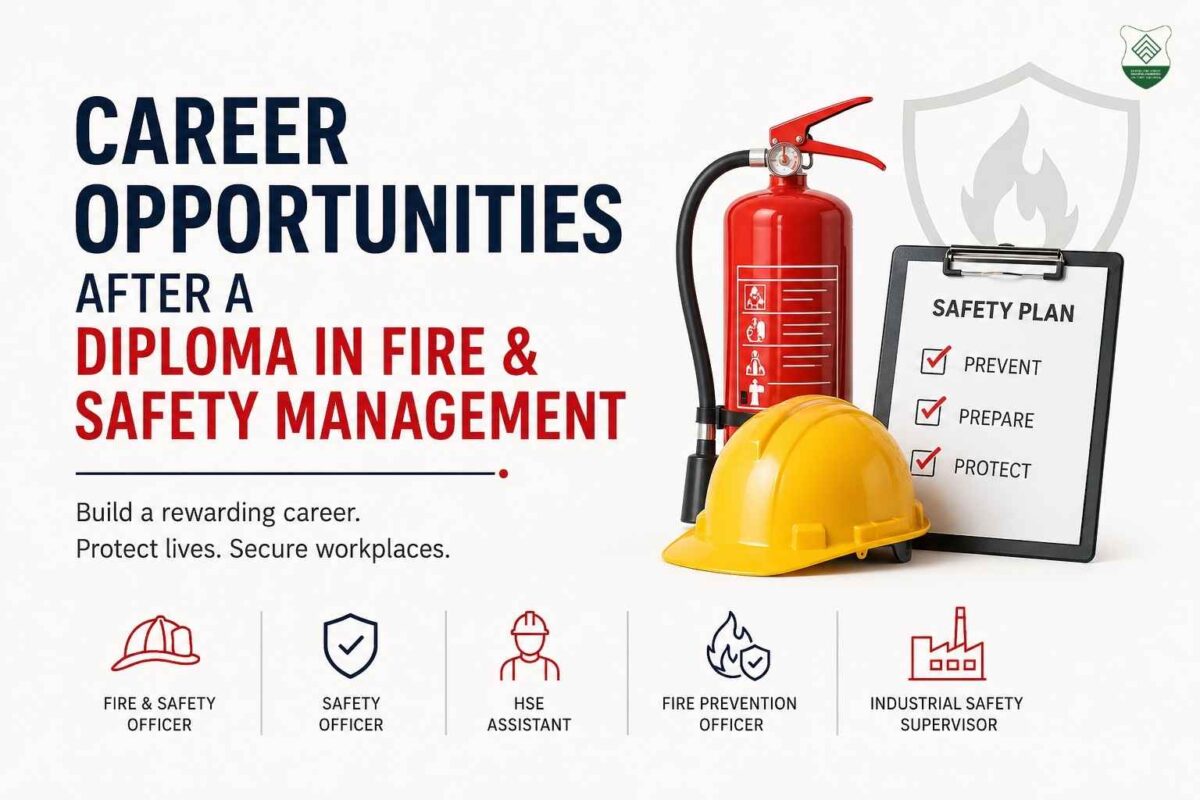
Did you know, choosing a Diploma in Fire and Safety Course in Kolkata can open the door to a rewarding career focused on protecting people, property and workplaces? As industries become increasingly focused on workplace safety and emergency preparedness, trained safety professionals are in demand across construction, manufacturing, healthcare, hospitality and other sectors. If you are considering a Fire and Safety Course in Kolkata, understanding the career opportunities can help you make an informed decision.

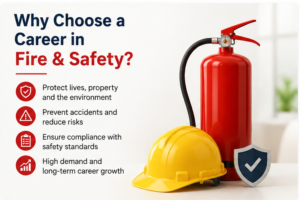
Why Choose a Career in Fire & Safety?

Why Choose a Career in Fire & Safety?

Fire and safety professionals play an important role in identifying hazards, preventing accidents and ensuring compliance with workplace safety practices. A diploma provides students with practical knowledge of fire prevention, emergency response, risk assessment, industrial safety and safety management.

The field is also suitable for individuals who want a career that combines technical knowledge with responsibility and real-world problem-solving.

Career Opportunities After a Fire & Safety Diploma

Career Opportunities After a Fire & Safety Diploma

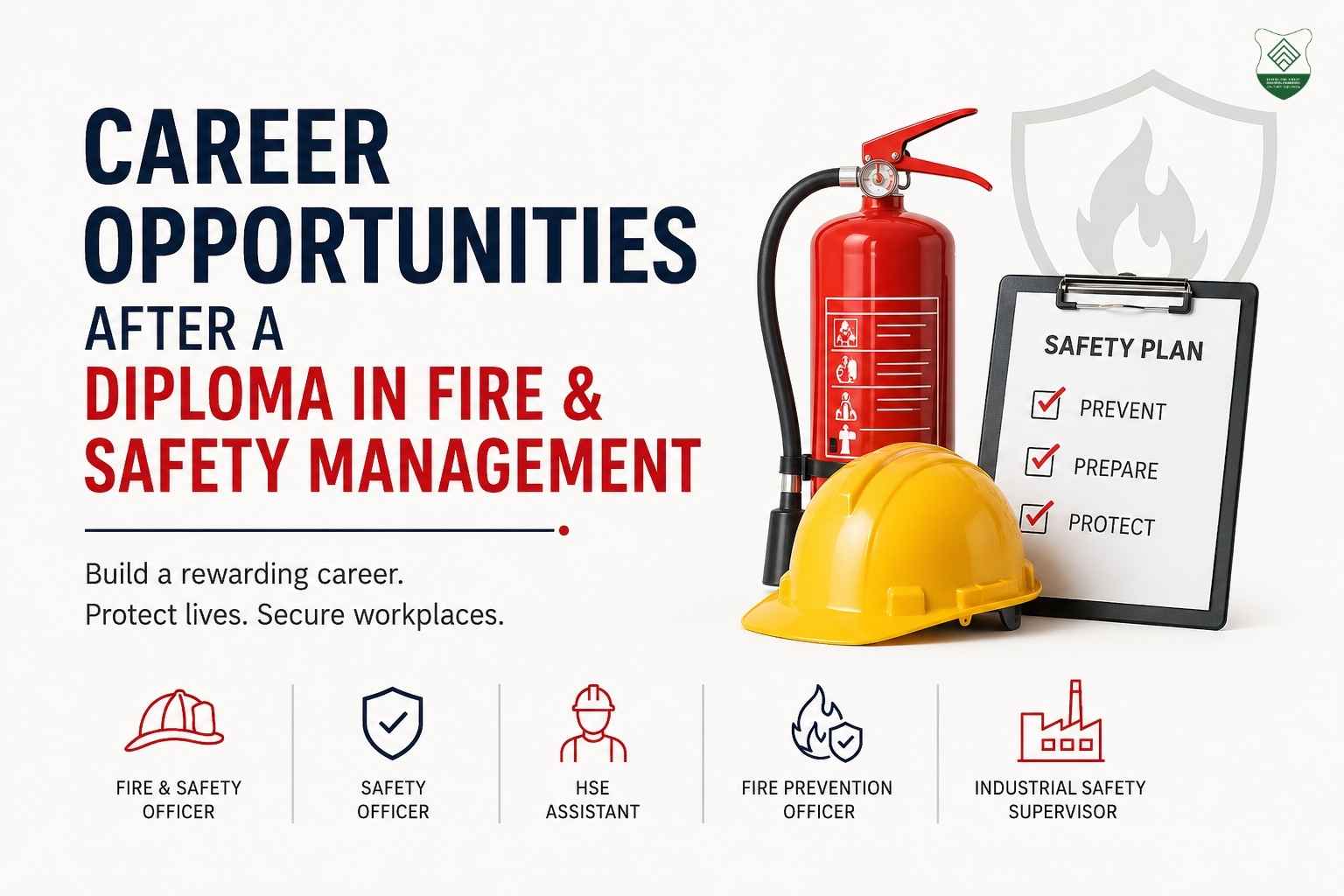
After completing a diploma, candidates can explore several career paths, including:

  1. Fire & Safety Officer

Fire and Safety Officers are responsible for identifying fire hazards, conducting inspections, organising drills and implementing fire prevention measures in workplaces.

  1. Safety Officer

Safety Officers monitor workplace conditions, identify potential risks, promote safe working practices and help organisations maintain safety standards.

  1. HSE Assistant

Health, Safety and Environment (HSE) professionals support organisations in implementing safety procedures, maintaining records, conducting inspections and managing workplace risks.

  1. Fire Prevention Officer

These professionals focus specifically on preventing fire incidents through inspections, safety awareness programmes, emergency planning and preventive measures.

  1. Industrial Safety Supervisor

Manufacturing and industrial facilities require trained professionals to monitor workplace hazards, supervise safety procedures and encourage compliance among workers.

Career Opportunities After a Fire & Safety Diploma

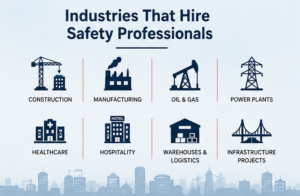
Industries That Hire Safety Professionals

A qualified safety professional can find opportunities in construction, manufacturing, oil and gas, power plants, hospitals, warehouses, logistics, hotels, infrastructure projects and other industries.

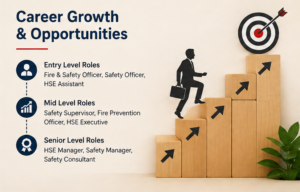
With experience and additional certifications, professionals can also progress into senior safety, HSE management and safety consultancy roles.

Build Your Career with the Right Training

Build Your Career with the Right Training

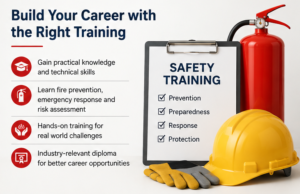
A career in fire and safety requires more than theoretical knowledge. Practical training, emergency response skills, hazard identification and risk assessment can help candidates become better prepared for real workplace challenges.

If you are looking for a Diploma in Fire and Safety Course in Kolkata, choosing a programme that combines technical education with practical safety knowledge can be an important first step towards a successful career.

So, start building your future in safety today. Explore a professional Fire and Safety Course in Kolkata and take the first step towards becoming a skilled safety professional.

 

Also read: Switch Career from Blue Collar to White Collar with Safety Courses in Kolkata


Recent Post

Top 6 Skills…

Career Opportunities After…

Safety Planning for…

Categories
Safety Course

Safety Planning for Rath Yatra: Why Safety Officers Matter!

Safety Planning for Rath Yatra

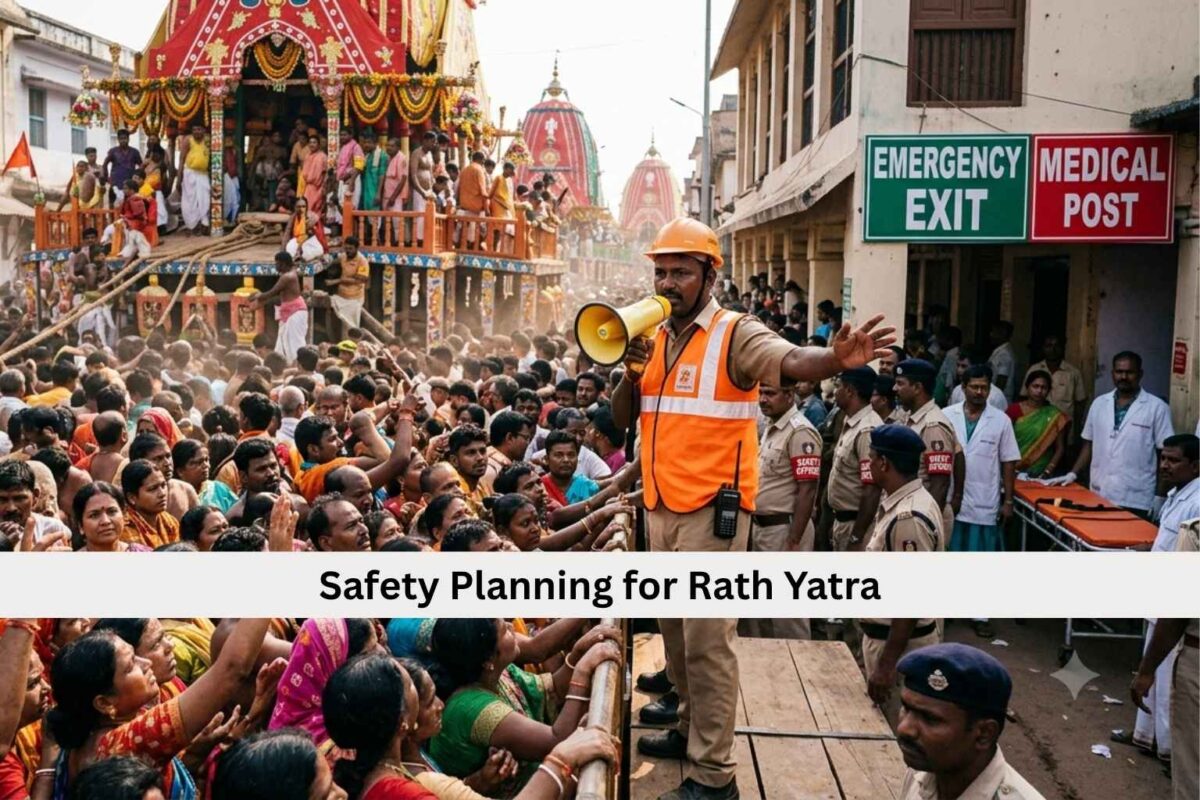
Rath Yatra is one of India’s most celebrated religious festivals, attracting millions of devotees every year throughout the entire globe. While the event symbolizes faith and unity, it also presents significant safety challenges due to the enormous crowds. Proper planning, trained professionals, and modern safety practices are essential to ensure a secure environment for everyone. This growing need has also increased the demand for safety courses in Kolkata from the Best Safety Training Institute in Kolkata a valuable career choice.

Understanding the Safety Challenges

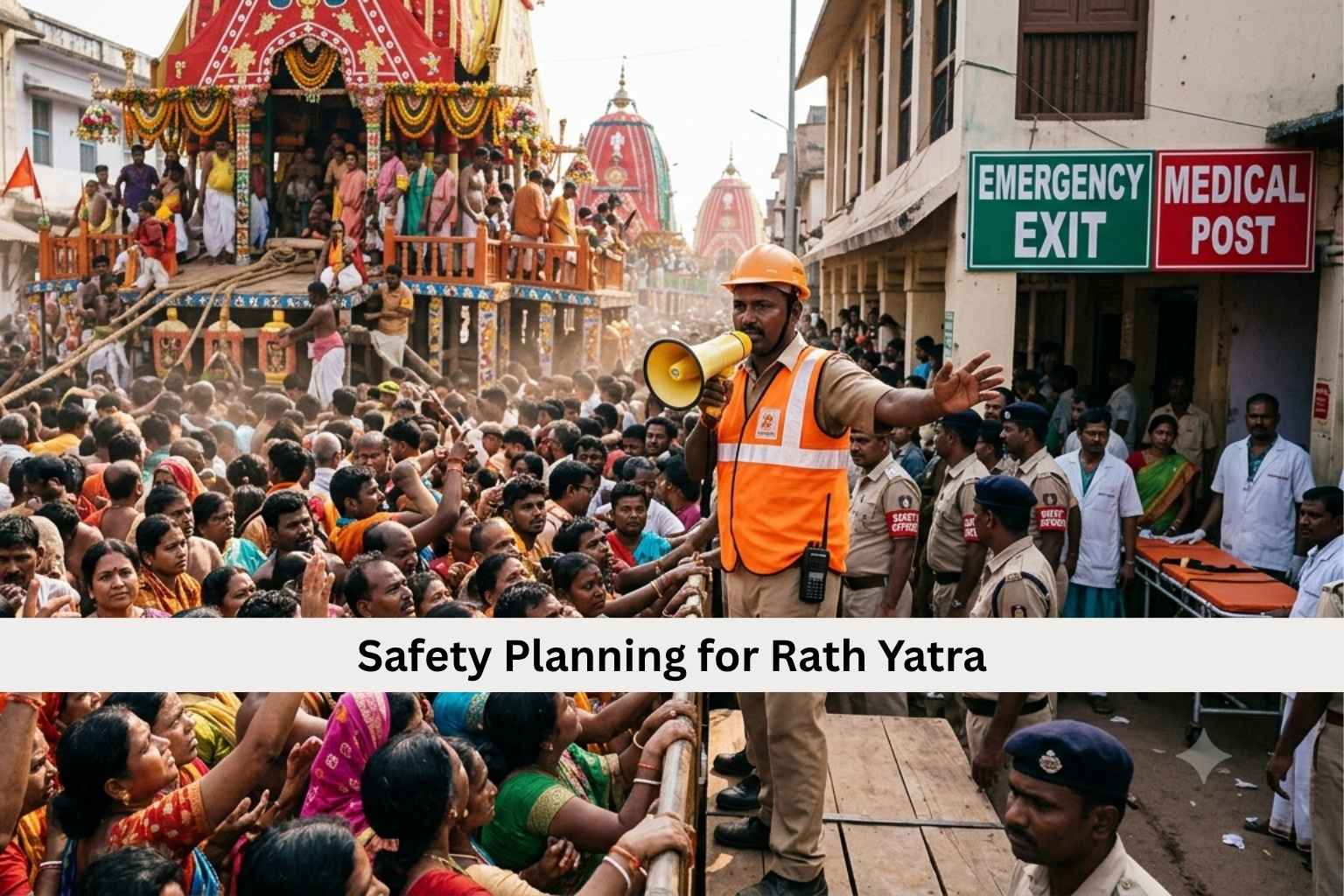
A gathering of this scale requires careful coordination to manage crowd movement, prevent stampedes, handle heat-related illnesses, and maintain smooth traffic flow. Temporary stages, barricades, electrical installations, and food stalls also introduce fire and structural risks. Any lapse in planning can affect thousands of people within minutes.

Safety Planning Makes the Difference

A successful event begins with a detailed risk assessment. Identifying hazards in advance helps authorities implement preventive measures before devotees arrive. Clear evacuation routes, emergency communication systems, medical preparedness, and coordination among different agencies allow faster responses during unexpected situations. Well-planned safety strategies reduce confusion and improve public confidence.

Why Safety Officers Are Indispensable

Safety Officers are responsible for monitoring risks throughout the event. They inspect venues, identify unsafe conditions, supervise emergency exits, oversee fire safety arrangements, and ensure safety guidelines are followed. They also work closely with police, healthcare teams, firefighters, and volunteers to maintain order and respond quickly when required.

Rath Yatra

Preventing Emergencies Through Professional Expertise

The primary responsibility of a Safety Officer is to prevent incidents rather than react to them. By monitoring crowd density, identifying potential hazards, inspecting temporary structures, and ensuring emergency equipment is functional, they help minimize risks before they become emergencies. Their vigilance plays a crucial role in protecting lives.

Essential Safety Practices for Public Gatherings

Large-scale events like Rath Yatra require multiple layers of protection. Effective crowd control, CCTV surveillance, public announcement systems, clearly marked emergency exits, first-aid centres, fire extinguishers, trained volunteers, and emergency medical teams all contribute to safer celebrations. Regular mock drills and communication between authorities further strengthen preparedness.

A Growing Career with Great Opportunities

As India continues to expand its infrastructure, industries, and public events, the demand for certified Safety Officers continues to rise. Construction, manufacturing, oil and gas, logistics, and event management all require professionals who understand workplace and public safety standards. This makes safety a future-focused profession with excellent career prospects.

Why Choose the Center for Safety Education

Why Choose the Center for Safety Education?

The Center for Safety Education prepares aspiring professionals with practical, industry-relevant training. Its comprehensive curriculum, experienced trainers, hands-on learning approach, placement assistance, and recognized certifications help students build the confidence and skills required for successful careers in occupational and event safety.

However, the success of Rath Yatra Utsav highly depends not only on efficient organization but also on proactive safety management. Behind every safe public event are trained professionals dedicated to preventing risks and protecting lives. If you aspire to become one of them, enrolling in safety courses in Kolkata through a Safety Officer course at the Best Safety Training Institute in Kolkata can open the door to a meaningful and rewarding career in safety management.


Also read: Switch Career from Blue Collar to White Collar with Safety Courses in Kolkata

Recent Post

Top 6 Skills…

Career Opportunities After…

Safety Planning for…

Categories
Safety Course

5 Safety Training Myths That Put Businesses at Risk – Listen to the Best Safety Training Institute in Kolkata

Safety Training Myths

Workplace accidents rarely happen because of bad luck—they often result from poor safety awareness and inadequate training. Yet, many organizations continue to believe outdated myths that weaken their safety culture. Investing in Safety Training courses in Kolkata equips employees with the knowledge and practical skills needed to identify hazards, prevent incidents, and comply with safety regulations. If you are looking for safety courses in Kolkata, it is immensely essential to separate fact from fiction before these myths cost your business time, money, and reputation.

Myth 1: Safety Training Is Just a Legal Formality

Fact: Many employers conduct training only to satisfy regulatory requirements. In reality, effective safety training goes beyond compliance. It focuses on Hazard Identification and Risk Assessment (HIRA), Risk Control Measures, and Behavior-Based Safety (BBS) to minimize workplace incidents and create a proactive safety culture.

Myth 2: PPE Alone Can Prevent Workplace Accidents

Fact: Providing Personal Protective Equipment (PPE) is important, but PPE is considered the last line of defense in the Hierarchy of Controls. Without proper training on hazard recognition, safe work practices, and emergency procedures, employees remain vulnerable to accidents despite wearing protective gear.

Myth 3: Experienced Employees Don’t Need Refresher Training

Fact: Even seasoned workers can develop unsafe habits over time. Regular refresher sessions reinforce critical concepts such as Job Safety Analysis (JSA), Permit to Work (PTW) systems, Lockout/Tagout (LOTO) procedures, and emergency evacuation protocols. Continuous training helps reduce human error and keeps employees updated with evolving industry standards.

Myth 4: Safety Training Is Too Expensive

Fact: The financial impact of workplace accidents is often far greater than the cost of training. Medical expenses, equipment damage, production downtime, compensation claims, and legal penalties can significantly affect business operations. A well-trained workforce reduces Lost Time Injuries (LTI), improves operational efficiency, and protects organizational assets.

Myth 5: Safety Is the Responsibility of the Safety Officer Alone

Fact: Safety is a shared responsibility. Every employee, supervisor, and manager plays a vital role in maintaining a safe workplace. Professional safety training promotes accountability, encourages hazard reporting, and strengthens overall Safety Management Systems (SMS) within an organization.

Choose the Right Safety Training Partner

Choose the Right Safety Training Partner

A strong safety culture begins with quality education. The Best Safety Training Institute in Kolkata offers industry-oriented programs that combine classroom learning with practical demonstrations, case studies, and real-world safety scenarios. This approach helps employees confidently apply safety principles in their daily work.

Whether you are an individual seeking career advancement or an organization aiming to strengthen workplace safety, enrolling in Safety Training courses in Kolkata is a smart investment. If you are searching for trusted safety courses in Kolkata, Center for Safety Education provides expert-led training designed to enhance compliance, improve risk management, and build a safer, more productive workplace. The right training today can prevent tomorrow’s accidents.


Also read: Why Hiring a Competent Safety Officer Is Essential for Workplace Safety

Recent Post

Top 6 Skills…

Career Opportunities After…

Safety Planning for…

Categories
Uncategorized

Switch Career from Blue Collar to White Collar with Safety Courses in Kolkata

Switch Career from Blue Collar to White Collar with Safety Courses in Kolkata

The modern industrial landscape is rapidly evolving, creating new opportunities for skilled professionals to move beyond traditional job roles. With the growing importance of occupational safety and regulatory compliance, workers can now transition from blue-collar positions to professional white-collar careers through specialized safety courses in Kolkata. Enrolling in the Best Safety Training Institute in Kolkata can provide the knowledge, certifications, and leadership skills required to accelerate this career transformation.

Understanding Blue-Collar and White-Collar Careers

Blue-collar professionals are typically engaged in hands-on operational activities such as construction, manufacturing, maintenance, logistics, and plant operations. These roles require technical expertise, practical experience, and operational efficiency.

White-collar professionals, on the other hand, focus on management, planning, administration, compliance, and strategic decision-making. Positions such as Safety Officer, Safety Engineer, HSE Manager, and Compliance Officer fall under this category.

As industries become increasingly safety-conscious, the distinction between these roles is narrowing, creating a clear pathway for career advancement through professional training and certification.

How Safety Training Bridges the Gap

How Safety Training Bridges the Gap

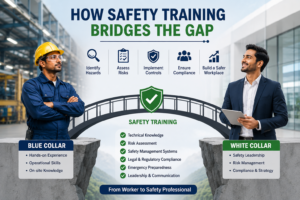
One of the most effective ways to move from a blue-collar role to a white-collar position is by acquiring expertise in Occupational Health, Safety, and Environment (HSE) management.

Professional safety courses in Kolkata equip candidates with essential competencies, including:

  • Occupational Health and Safety (OHS) Management
  • Hazard Identification and Risk Assessment (HIRA)
  • Job Safety Analysis (JSA)
  • Safety Management Systems (SMS)
  • Incident Investigation Techniques
  • Emergency Response Planning
  • Fire Safety and Industrial Safety Management
  • Personal Protective Equipment (PPE) Compliance
  • ISO 45001 Occupational Health and Safety Standards
  • Legal and Regulatory Compliance Frameworks

These technical and managerial skills enable professionals to take on supervisory and administrative responsibilities within organizations.

Career Progression Path

The transition from blue collar to white collar often follows a structured growth model:

Entry-Level Worker/Technician

Skilled Worker with Safety Certifications

Safety Supervisor

Safety Officer

Safety Engineer or HSE Professional

Safety Manager/Compliance Manager

As professionals gain industry experience and recognized certifications, they move from task execution to workforce supervision, risk management, safety auditing, and organizational leadership.

Why Industries Need Certified Safety Professionals

Industrial sectors today operate under stringent safety regulations and compliance requirements. Organizations actively seek professionals who can:

  • Identify workplace hazards
  • Implement preventive safety measures
  • Conduct risk assessments
  • Ensure statutory compliance
  • Reduce workplace accidents
  • Promote a strong safety culture

The increasing adoption of international standards such as ISO 45001 has further increased the demand for qualified safety professionals across construction, oil & gas, manufacturing, infrastructure, logistics, and power sectors.

Benefits of Safety Courses for Career Growth

Pursuing professional safety training offers several advantages:

  • Enhanced employability
  • Higher salary potential
  • Leadership opportunities
  • International career prospects
  • Industry-recognized certifications
  • Better job security

The technical knowledge gained through safety education helps professionals become valuable assets to employers while opening doors to managerial and administrative roles.

In a nutshell, the journey from blue collar to white collar is no longer limited by traditional educational pathways. With the right certifications, practical exposure, and industry-focused training, professionals can successfully advance into leadership and management positions. By enrolling in the Best Safety Training Institute in Kolkata, candidates can develop the expertise needed to excel in modern industries.

If you are looking to build a rewarding career, now is the ideal time to explore safety courses in Kolkata and take the very first step toward professional growth and long-term success.

Also read: Career Opportunities After a Fire and Safety Course in Kolkata

Recent Post

Top 6 Skills…

Career Opportunities After…

Safety Planning for…

Categories
Safety Course

Why Hiring a Competent Safety Officer Is Essential for Workplace Safety

Why Hiring a Competent Safety Officer Is Essential for Workplace Safety

Workplace safety is a critical aspect of every industry, whether it is construction, manufacturing, oil and gas, logistics, or healthcare. Hiring a qualified safety officer can significantly reduce workplace accidents, improve compliance, and create a safer work environment for employees. As industries increasingly prioritize safety standards, professionals trained through safety courses in Kolkata and a recognized Safety Officer course in Kolkata are becoming highly valuable assets for organizations.

Ensures Compliance with Safety Regulations

One of the primary responsibilities of a safety officer is to ensure that the organization complies with all applicable health and safety regulations. Non-compliance can lead to legal penalties, operational disruptions, and reputational damage. A competent safety officer stays updated with industry standards and helps the organization maintain regulatory compliance at all times.

Reduces Workplace Accidents and Hazards

Reduces Workplace Accidents and Hazards

Safety officers are trained to identify potential hazards before they result in accidents. They conduct regular inspections, risk assessments, and safety audits to eliminate unsafe conditions. By implementing preventive measures and promoting safe work practices, they help reduce injuries, property damage, and downtime.

Promotes a Strong Safety Culture

A workplace that prioritizes safety experiences higher employee morale and productivity. Safety officers conduct training sessions, awareness programs, and emergency preparedness drills to educate employees about safe working practices. This creates a culture where safety becomes everyone’s responsibility rather than just a management requirement.

Improves Emergency Preparedness

Improves Emergency Preparedness

Unexpected emergencies such as fires, chemical spills, equipment failures, or natural disasters can occur at any workplace. A skilled safety officer develops emergency response plans, organizes evacuation drills, and ensures employees know how to react during critical situations. Their preparedness can minimize losses and save lives.

Enhances Business Productivity

Accidents often result in lost work hours, compensation claims, equipment damage, and project delays. By preventing workplace incidents, safety officers help organizations maintain smooth operations and improve overall productivity. Investing in workplace safety is ultimately an investment in business success.

The Growing Demand for Qualified Safety Officers

With increasing awareness about occupational health and safety, industries are actively seeking trained safety professionals. Individuals looking to build a rewarding career in this field can benefit from enrolling in a reputed Safety Officer course in Kolkata. Quality training provides practical knowledge, industry exposure, and certification that enhance employability.

Choosing the Best Safety Training Institute in Kolkata ensures access to experienced trainers, updated course modules, and hands-on learning opportunities. Such programs equip aspiring professionals with the skills needed to manage workplace safety effectively across diverse industries.

A competent safety officer plays a vital role in preventing accidents, ensuring compliance, improving productivity, and protecting lives. As organizations continue to prioritize workplace safety, the demand for skilled professionals will only grow. If you aspire to build a successful career in this field, enrolling in safety courses in Kolkata offered by the Best Safety Training Institute in Kolkata and completing a recognized Safety Officer course in Kolkata can be the first step toward a promising future.

Also read: Why Safety Education is the Backbone of a Safe Workplace?

Recent Post

Top 6 Skills…

Career Opportunities After…

Safety Planning for…

Categories
Safety Course

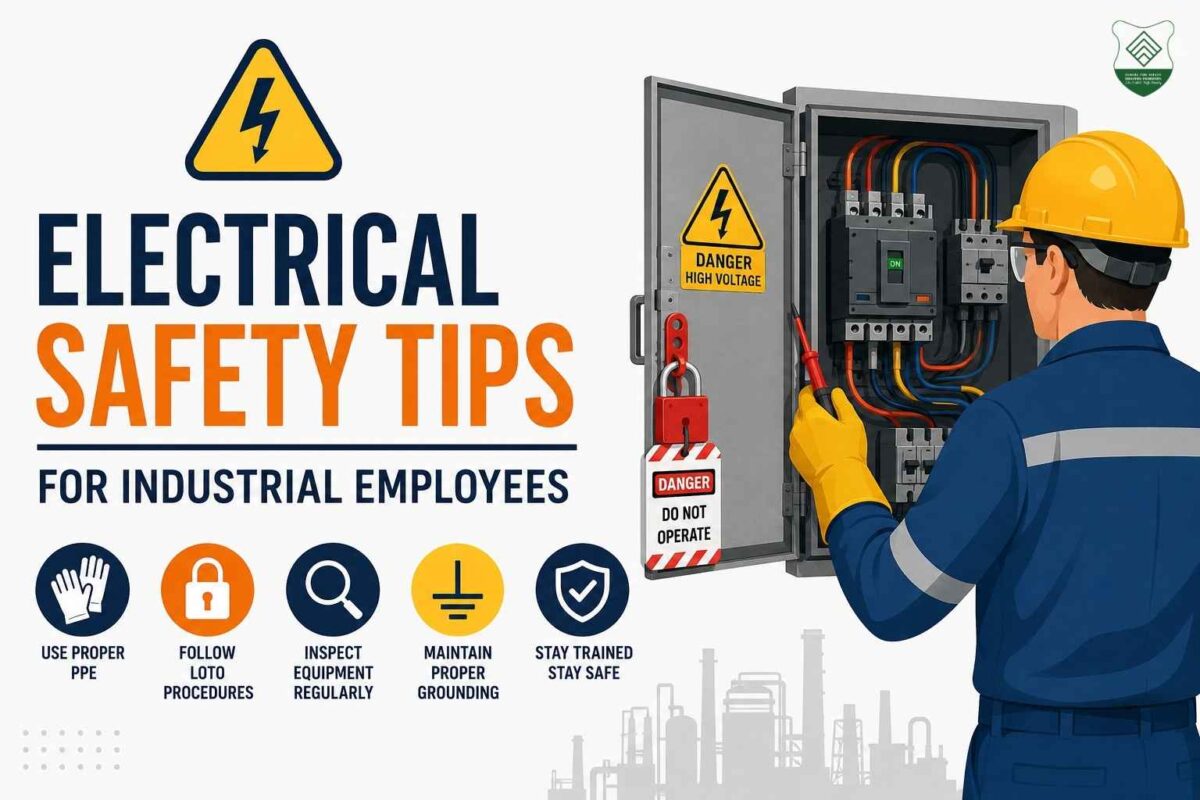
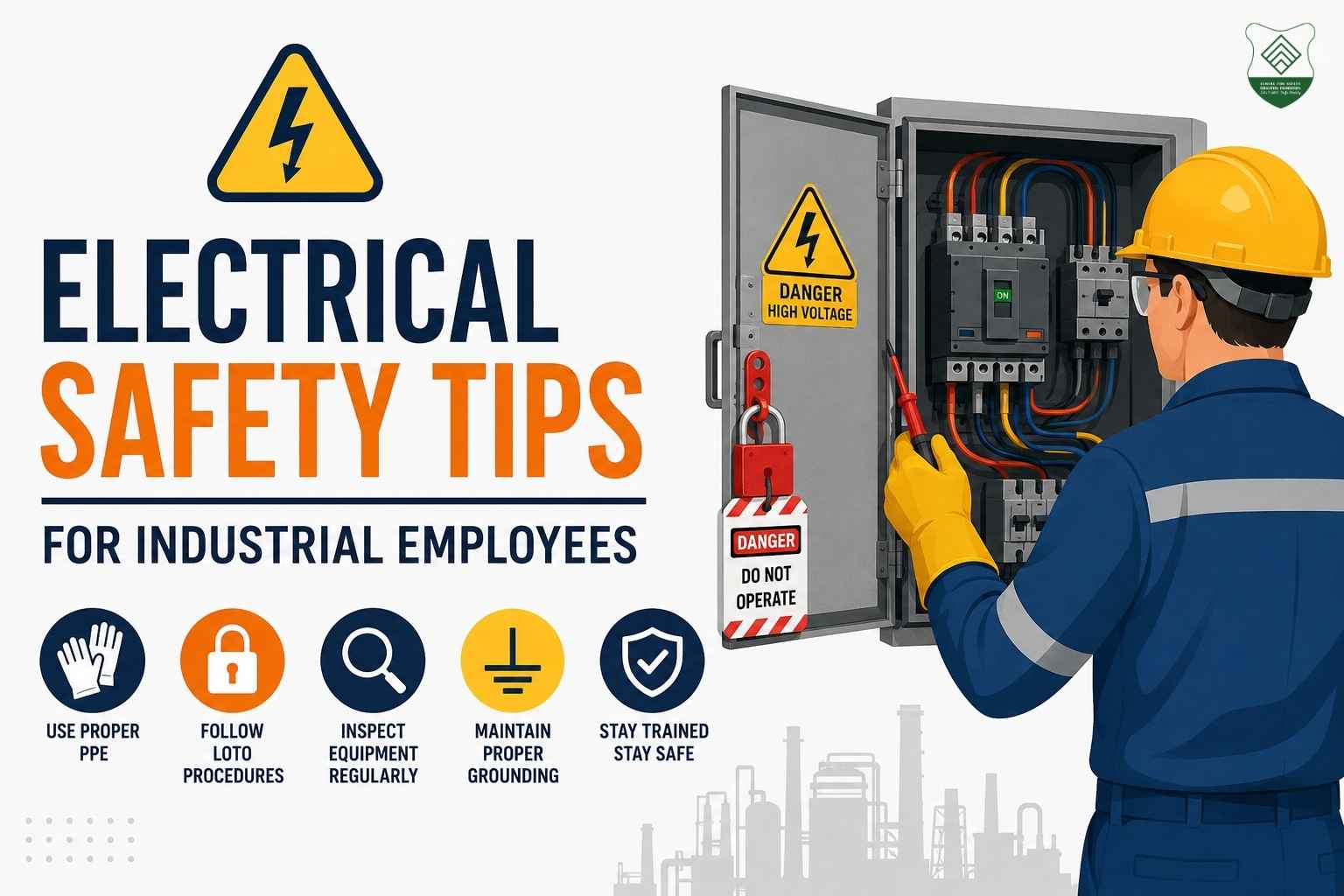
Electrical Safety Tips for Industrial Employees

Electrical Safety Tips for Industrial Employees

Industrial workplaces are filled with high-voltage equipment, heavy machinery, exposed wiring, and electrically powered tools that can become dangerous if not handled properly. This is the very reason why proper electrical safety awareness is essential to prevent accidents such as electric shocks, arc flashes, burns, and equipment failure. However, enrolling in an Electrical Safety Course in Kolkata can help workers understand electrical hazards and maintain a safer industrial environment. Many professionals also choose safety courses in Kolkata and an Industrial Safety Course in Kolkata to improve workplace safety knowledge and compliance.

Understand Common Electrical Hazards

Electrical hazards in industries usually include exposed conductors, overloaded circuits, damaged insulation, improper grounding, and wet working conditions. One of the most dangerous risks is an arc flash, which occurs when electric current travels through the air between conductors. Arc flashes can generate extreme heat and cause severe burns.

Employees should also be aware of electrical short circuits, ground faults, and electrocution risks while working near energized systems. Understanding these technical hazards is the first step toward prevention.

Follow Lockout/Tagout (LOTO) Procedures

Lockout/Tagout (LOTO) is a critical electrical safety protocol used during maintenance and repair work. It ensures that machines are completely de-energized before servicing.

The process includes:

  • Isolating the energy source
  • Locking the disconnect switch
  • Tagging the equipment with warning labels
  • Verifying zero energy before beginning work

Ignoring LOTO procedures can result in accidental energization, leading to serious injuries or fatalities.

Use Proper Personal Protective Equipment (PPE)

Industrial employees should always wear appropriate PPE when working around electrical systems. Essential protective equipment includes:

  • Insulated gloves
  • Dielectric safety shoes
  • Flame-resistant clothing
  • Arc-rated face shields
  • Safety helmets with electrical protection

PPE acts as the last line of defense against electrical injuries and should meet industry safety standards.

Electrical Safety Tips for Industrial Employees
Inspect Electrical Equipment Regularly

Faulty tools and damaged cables are among the leading causes of industrial electrical accidents. Employees should inspect:

  • Extension cords
  • Circuit breakers
  • Insulation materials
  • Control panels
  • Portable electrical tools

Any signs of overheating, exposed wires, or unusual sparks should be reported immediately. Preventive maintenance significantly reduces equipment failure risks.

Avoid Overloading Circuits

Overloaded circuits can cause overheating, insulation damage, and electrical fires. Industrial workers should ensure that machinery operates within recommended voltage and current ratings. Using proper load distribution systems and surge protection devices can improve operational safety.

Maintain Proper Grounding

Grounding protects employees from electric shock by safely directing excess current to the earth. Poor grounding can lead to equipment malfunction and dangerous touch voltage. Industries should regularly test grounding systems and ensure compliance with electrical safety standards.

Importance of Safety Training

Regular training programs help employees stay updated with industrial electrical safety protocols, hazard identification, and emergency response procedures. Joining an Electrical Safety Course in Kolkata helps workers understand practical safety measures, while safety courses in Kolkata enhance overall workplace safety awareness. A certified Industrial Safety Course in Kolkata also prepares employees to manage high-risk industrial environments more effectively.

Electrical safety is not just about compliance; it is about protecting lives, machinery, and productivity. Proper hazard identification, PPE usage, grounding practices, and adherence to LOTO procedures can significantly reduce workplace accidents. Investing in professional training through an Electrical Safety Course in Kolkata, advanced safety courses in Kolkata, or an Industrial Safety Course in Kolkata can help industries create a safer and more efficient work environment.

Recent Post

Top 6 Skills…

Career Opportunities After…

Safety Planning for…

Categories
Safety Course

Why Safety Education is the Backbone of a Safe Workplace?

Safety Education is the Backbone of a Safe Workplace

Did you know, a safe workplace is not built by chance—it is built through knowledge, training, and continuous awareness? This is why safety education plays a crucial role in industrial and organizational environments. Enrolling in the Best Safety Training Centre in Kolkata or pursuing safety courses in Kolkata such as an Industrial Safety Course in Kolkata ensures that workers and professionals are equipped with the right skills to prevent accidents and maintain compliance with safety standards.

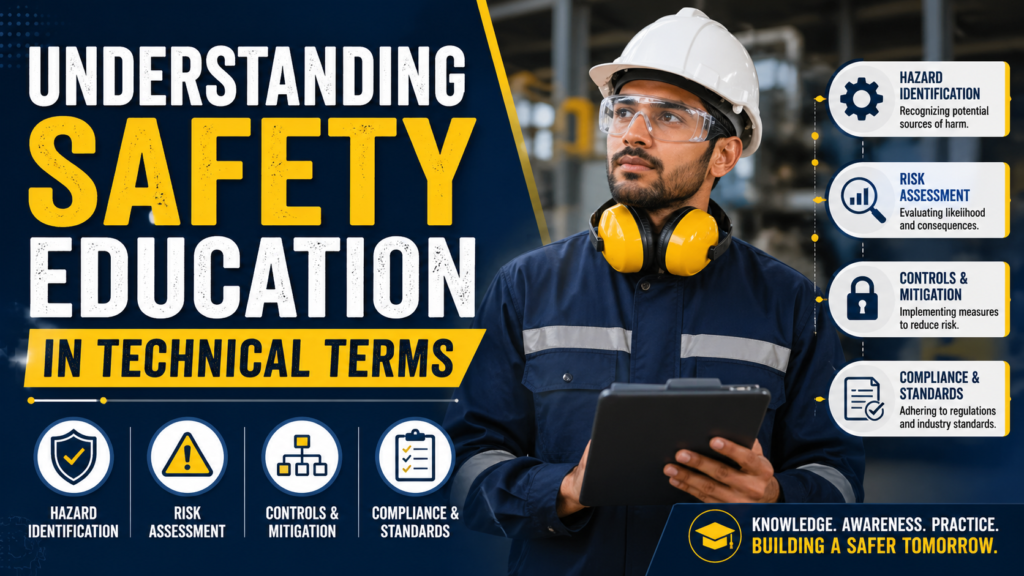
Understanding Safety Education in Technical Terms

Understanding Safety Education in Technical Terms

Safety education involves structured training programs that focus on hazard identification, risk assessment, and implementation of control measures. It is based on globally accepted frameworks such as:

  • Hazard Identification and Risk Assessment (HIRA)
  • Job Safety Analysis (JSA)
  • Permit to Work (PTW) Systems
  • Standard Operating Procedures (SOPs)

These technical tools help in identifying potential hazards in workplaces such as construction sites, factories, and chemical plants. Without proper training, workers may fail to recognize risks like electrical hazards, confined space dangers, or chemical exposure.

Role of Safety Training in Accident Prevention

Safety education directly impacts accident prevention by promoting proactive behavior. Trained professionals can:

  • Conduct systematic risk assessments
  • Implement engineering and administrative controls
  • Use Personal Protective Equipment (PPE) effectively
  • Respond efficiently during emergencies

For example, understanding the hierarchy of controls—elimination, substitution, engineering controls, administrative controls, and PPE—enables workers to minimize risks at their source rather than relying solely on protective gear.

Compliance with Legal Standards

In India, workplace safety is governed by regulations such as the Occupational Safety, Health and Working Conditions Code, 2020 (OSH Code, 2020). Safety education ensures that organizations comply with these legal requirements by:

  • Maintaining proper documentation and audits
  • Conducting regular safety drills and inspections
  • Ensuring employee training and certification

Professionals trained through safety courses in Kolkata are well-versed in these regulations, helping companies avoid penalties and improve operational efficiency.

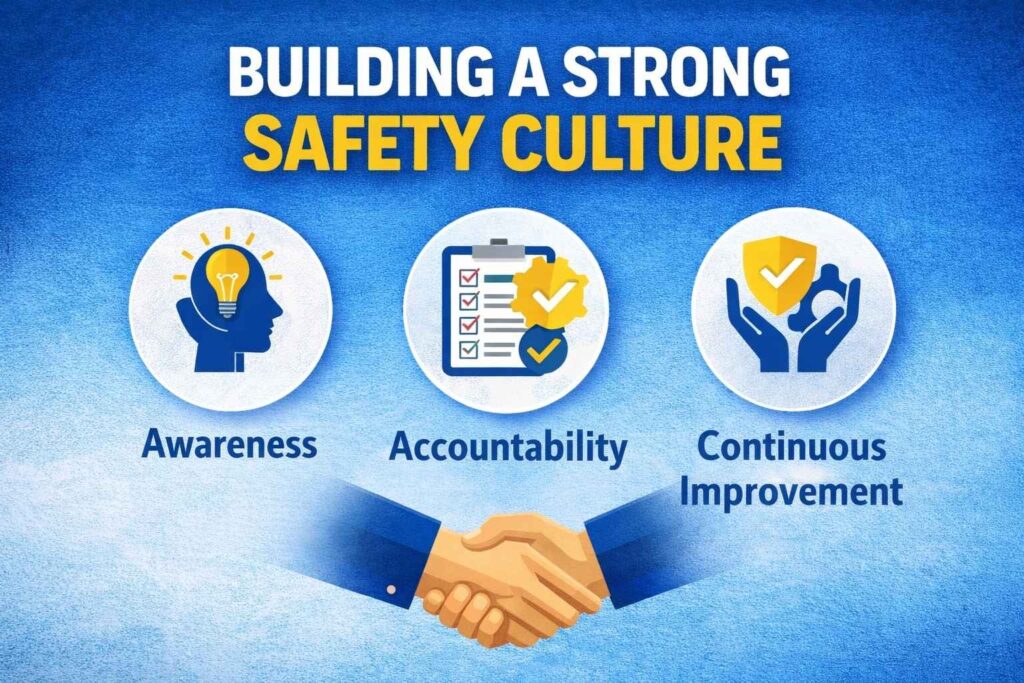
Building a Strong Safety Culture

Building a Strong Safety Culture

A workplace becomes truly safe when safety becomes a part of its culture. Safety education fosters:

  • Awareness among employees at all levels
  • Accountability in following safety protocols
  • Continuous improvement through audits and feedback

When employees understand the technical aspects of safety, they are more likely to follow procedures and report unsafe conditions, leading to a zero-accident environment.

Nevertheless, safety education is not just a requirement—it is the foundation of a safe and productive workplace. By enrolling in the Best Safety Training Centre in Kolkata and opting for professional safety courses in Kolkata, including an Industrial Safety Course in Kolkata, individuals and organizations can significantly reduce risks, ensure compliance, and build a culture of safety that protects both lives and assets.

Recent Post

Top 6 Skills…

Career Opportunities After…

Safety Planning for…